 Descargar PDF
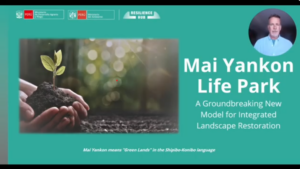
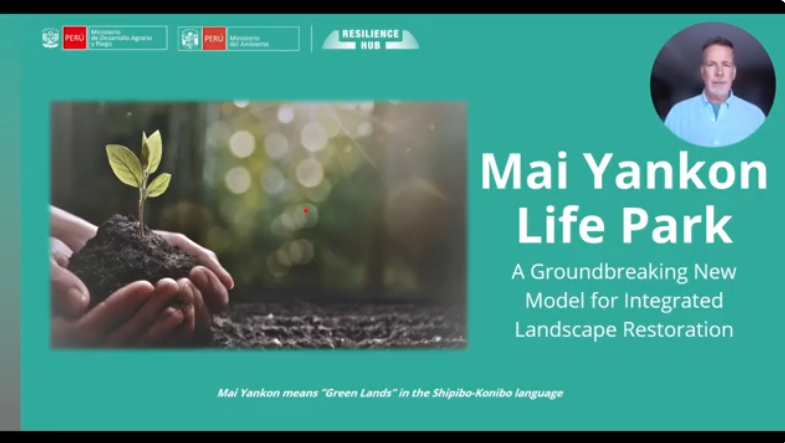
 In July 2025, Peru’s Ministry of Agrarian Development and Irrigation (Midagri) and the Regional Government of Ucayali officially launched the Mai Yankon Life Park (“Mai Yankon Life Park”), a large-scale reforestation and sustainable development initiative in the Peruvian Amazon. The project represents a significant investment of nearly USD 250 million and aims to restore 26,000 hectares of degraded land in the Ucayali region.
This public–private initiative, developed in close collaboration with Indigenous communities, seeks to create productive landscapes that promote biodiversity, while fostering economic prosperity and social well-being through agroforestry systems and regenerative agriculture.
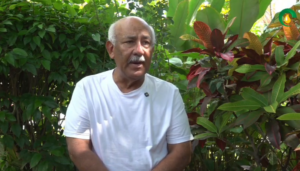
The project is steadily positioning itself as an innovative platform for environmental sustainability, scientific development, and responsible natural resource management in the Peruvian Amazon. This was highlighted by Michael Spoor, CEO of Ocho Sur, a leading sustainable palm oil producer in Ucayali.
According to Spoor, “Mai Yankon”—which means “green land” in the Shipibo-Konibo language—represents a comprehensive model that integrates biodiversity conservation, applied research, social inclusion, and sustainable economic development, fully aligned with international standards and the global climate action agenda.
“The Life Park approach demonstrates that responsible productive activities can indeed be promoted by combining science, technology, and conservation, generating tangible benefits for both Indigenous communities and Amazonian ecosystems,” Spoor emphasized.
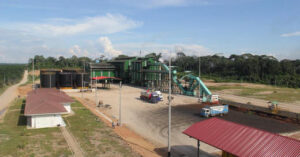
He stressed that this is not a theoretical concept, but a proven reality, where formal investment and modern business management can transform territories. As a concrete example, he pointed to Ocho Sur, which has successfully operated as a sustainable palm oil producer in Ucayali since 2016.
“Ocho Sur’s operations clearly show that it is possible to generate economic development, formal
employment, and social value, while protecting the environment and respecting local Indigenous communities,” the agribusiness leader stated.
Spoor concluded by underscoring that deforestation is not the root problem, but a symptom. “In the Amazon, deforestation is driven by poverty, informality, and the lack of productive alternatives. When these structural causes are addressed, deforestation declines organically,” he explained.
Background
Michael Spoor presented the Mai Yankon Life Park initiative during the COP30, held in Belém, which brought together global leaders, scientists, and key stakeholders committed to accelerating climate action, reducing emissions, expanding renewable energy, and advancing climate justice—particularly in the Amazon region.