At Ocho Sur, we produce sustainable palm oil from Peru’s Ucayali region, and our business lives or dies on one thing: proof. Proof that our product is deforestation-free. Proof that every liter is traceable from our mill to the end buyer. Proof that our sustainability certifications hold up under scrutiny. Without airtight identification across our entire supply chain, none of that proof exists.
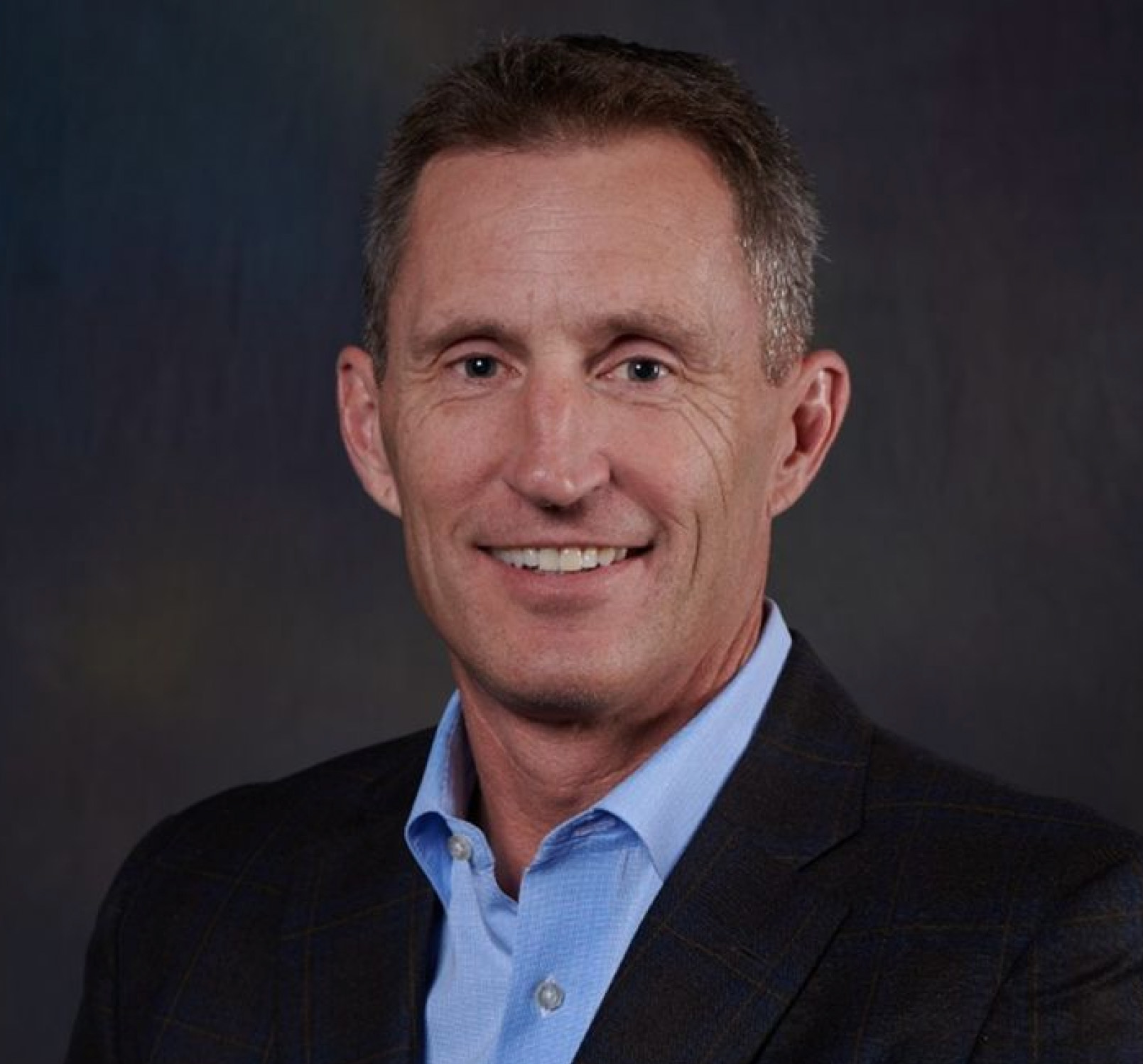
That’s why we sought out Scott Hietpas, CEO of Computype, the company that provides labels for 80% of the blood supply in North America, supporting the safe identification and traceability of critical blood products. Computype has spent decades engineering identification systems for supply chains where failure isn’t a setback; it’s a catastrophe. Their work in healthcare traceability provides a model for any industry where a product’s identity and origin define its entire value. We sat down with Scott to understand how world-class identification systems are built, and what companies like ours can learn from the most demanding supply chains on earth.
Q: Ocho Sur’s sustainability certifications depend entirely on our ability to prove product origin at every stage. You label 80% of North America’s blood supply. What do these two supply chains have in common?
A: Both live and die on provenance. The value of blood relies on it being safely and correctly identified; sustainable palm oil has no premium value if it can’t be verified as deforestation-free. In both cases, identification is not administrative overhead, it is the product’s proof of integrity. We build labeling systems that preserve that proof from origin through final delivery—because even a single gap in the chain can undermine the entire claim. Ocho Sur’s certifications and our healthcare traceability systems operate on the same principle: the label is the truth.
Q: Sustainable agriculture supply chains span thousands of miles, multiple processing stages, and extreme environmental conditions. How do identification systems maintain integrity across that kind of journey?
A: Through engineered permanence at every stage. We design labels for the harshest conditions in a supply chain, not only the easiest ones. For tropical agricultural environments like Peru’s Ucayali region, that means weather-resistant adhesives that hold through high humidity and heat, UV-stabilized substrates that maintain barcode readability through months of outdoor exposure, and serialization that ties each unit to a digital origin record that travels with it. The label applied at the source must be just as readable at the destination. That’s not a guarantee standard labels can make. Rather, it’s one we engineer for.
Q: How did Computype become the identification standard for North America’s blood supply?
A: By refusing to accept failure as a possibility. Blood product labels must adhere to flexible bags through refrigeration, long-distance transport, and repeated handling while remaining perfectly scannable at every checkpoint. Standard labels peel and become unreadable in cold-chain conditions. We formulate adhesives for blood bag substrates specifically, engineer cryogenic-rated materials for storage down to -196°C, and validate performance through protocols that simulate years of real-world conditions in weeks. The result: Computype labels 80% of North America’s blood supply because our identification systems eliminate the failure modes that cost lives. That same commitment to engineered reliability applies to every critical supply chain we serve.
Q: Certification bodies like RSPO demand verifiable traceability for sustainable palm oil. How do labeling systems make audits defensible rather than just documentable?
A: By replacing manual records with machine-readable proof. Manual documentation gets disputed, misfiled and lost. A durable barcode permanently adhered to a product and tied to a digital origin record delivers instant, unambiguous verification. When an auditor needs to confirm that a batch came from certified, non-deforested land, a scan provides a complete chain of custody in seconds. For companies whose market access depends on certification integrity, identification isn’t a reporting tool. It’s the evidence base that keeps the entire operation legitimate.
Q: What happens to a critical supply chain when identification fails?
A: Trust collapses, and everything built on top of it collapses with it. In healthcare, unidentifiable blood products are destroyed, patients are put at risk, and regulators investigate. In sustainable agriculture, unverifiable products lose certification, premium buyers walk, and investor confidence erodes. The commercial and operational consequences are immediate and severe. Companies whose value is built on product verification cannot afford identification failures at any point in the chain. We engineer labels that ensure that proof holds permanently, because the cost of a single identification failure in a critical supply chain will always exceed the cost of engineering it right from the start.
Q: For a company like Ocho Sur building traceability infrastructure for long-term certification and market credibility, where should we start?
A: Start with your harshest condition and engineer backward from it. Identify the most extreme environment your labels will face, whether that is tropical heat, outdoor UV exposure, or chemical contact during processing, and validate that your identification system performs there first. Everything easier than that will take care of itself. Then build serialization that ties every physical label to a digital record your certification body can access. Finally, choose an identification partner with documented performance data for your specific conditions, not a supplier offering off-the-shelf solutions hoping they hold up. Supply chains built on sustainability claims require identification systems built on the same standard of proof. That’s the only foundation worth building on.
Identification systems that make critical supply chains provable. Visit Computype.com to discover labeling solutions engineered for industries where traceability determines everything.